

Pretty Is the Easy Part. How Does Your Designer Actually Work?
Part 3 of 4 · Process
THE MASH GUIDE TO HIRING AN INTERIOR DESIGNER
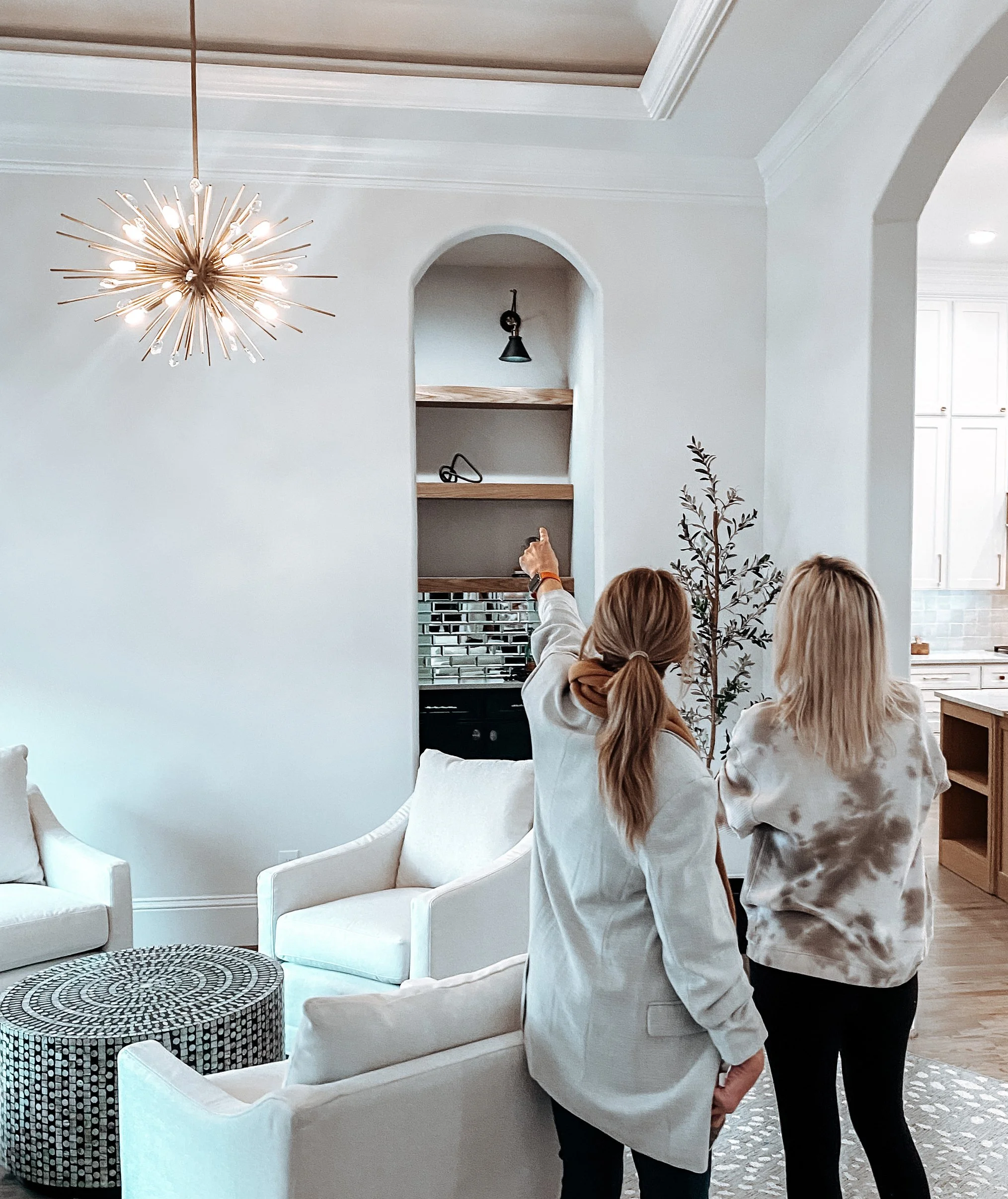
Beautiful homes aren't created by having perfect taste.
They're created by making hundreds of thoughtful decisions that all work together.
-MASH
You’ve found a designer whose work you love.
You like them. Their portfolio shows experience with projects like yours. You’ve had the first conversation and can actually imagine working together.
Great.
Now I’d ask a question that may matter just as much as any of those things:
How do they actually work?
Because whether you’re furnishing a few rooms, remodeling a kitchen or building an entire home, there are going to be a lot of decisions between “I love this idea” and “I love living here.”
And somebody needs to know what happens next.
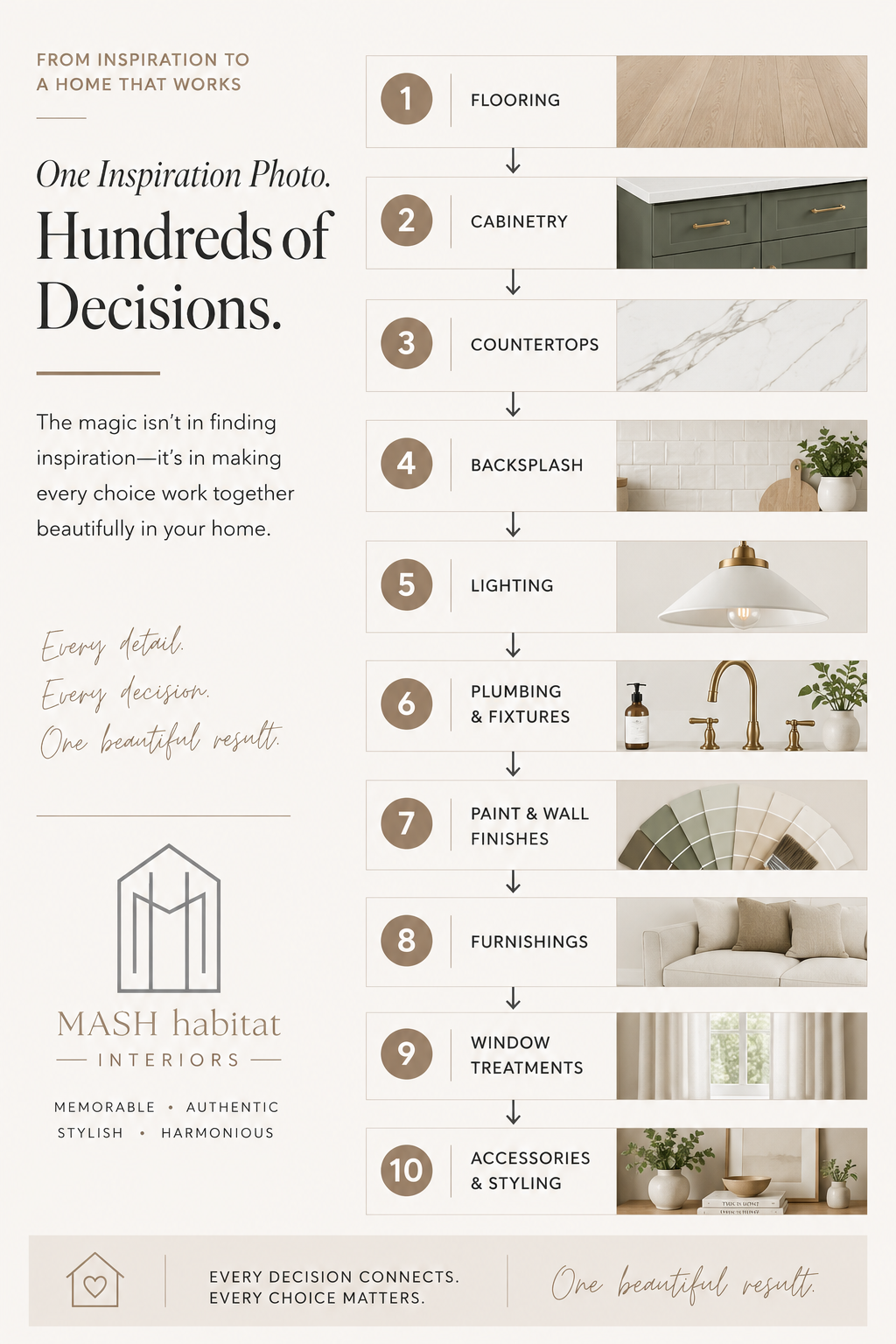
1. Is There a Process Before the Pretty Stuff Starts?
I know. Nobody hires an interior designer because they’re excited about process.
You want to talk about the kitchen. The gorgeous stone. The furniture. The lighting. The wallpaper you saved six months ago and still love.
I want to talk about those things too.
But first, I want to know how you live.
What’s working in your current home? What drives you crazy? Who lives there? Do you entertain? Do the kids bring friends home? Is this a forever home? Are there pieces you already own that matter to you?
And if we’re remodeling or building, we need to understand the house itself—measurements, plans, architecture, construction constraints, existing conditions, budget and scope.
Because those things affect what we design.
The best design decisions usually come after we understand the problem—not before.
If a designer is immediately selecting finishes without understanding the larger picture, I’d want to know what happens when all of those individual beautiful choices have to start working together.
This is one of those things you don’t necessarily notice when a project is going well.
You definitely notice it when it isn’t.
Furniture placement can affect electrical locations.
Plumbing locations affect cabinetry.
Cabinetry affects countertops.
Countertops affect backsplash decisions.
Lighting affects everything.
And suddenly the pendant you fell in love with six months ago is trying to hang directly over an air vent.
Design decisions rarely happen independently.
One decision affects another…which affects another…which affects another.
A good process creates an order for those decisions so we aren’t constantly backing up and redoing things that could have been resolved earlier.
That doesn’t mean nothing ever changes.
It means there’s a plan for moving the project forward.
2. Are Decisions Being Made in the Right Order?
This is one of those things you don’t necessarily notice when a project is going well.
You definitely notice it when it isn’t.
Furniture placement can affect electrical locations.
Plumbing locations affect cabinetry.
Cabinetry affects countertops.
Countertops affect backsplash decisions.
Lighting affects everything.
And suddenly the pendant you fell in love with six months ago is trying to hang directly over an air vent.
Design decisions rarely happen independently.
One decision affects another…which affects another…which affects another.
A good process creates an order for those decisions so we aren’t constantly backing up and redoing things that could have been resolved earlier.
That doesn’t mean nothing ever changes.
It means there’s a plan for moving the project forward.
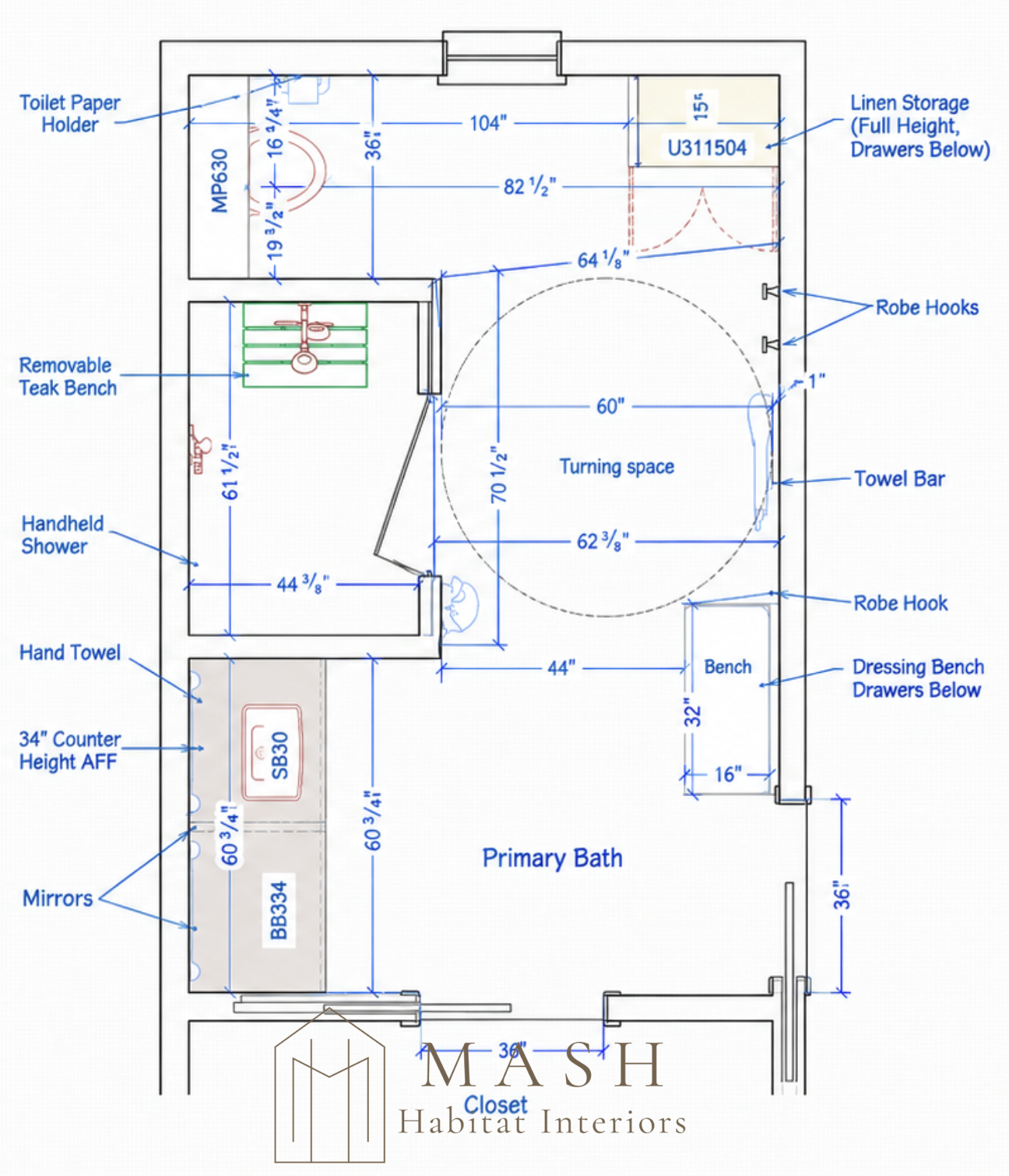
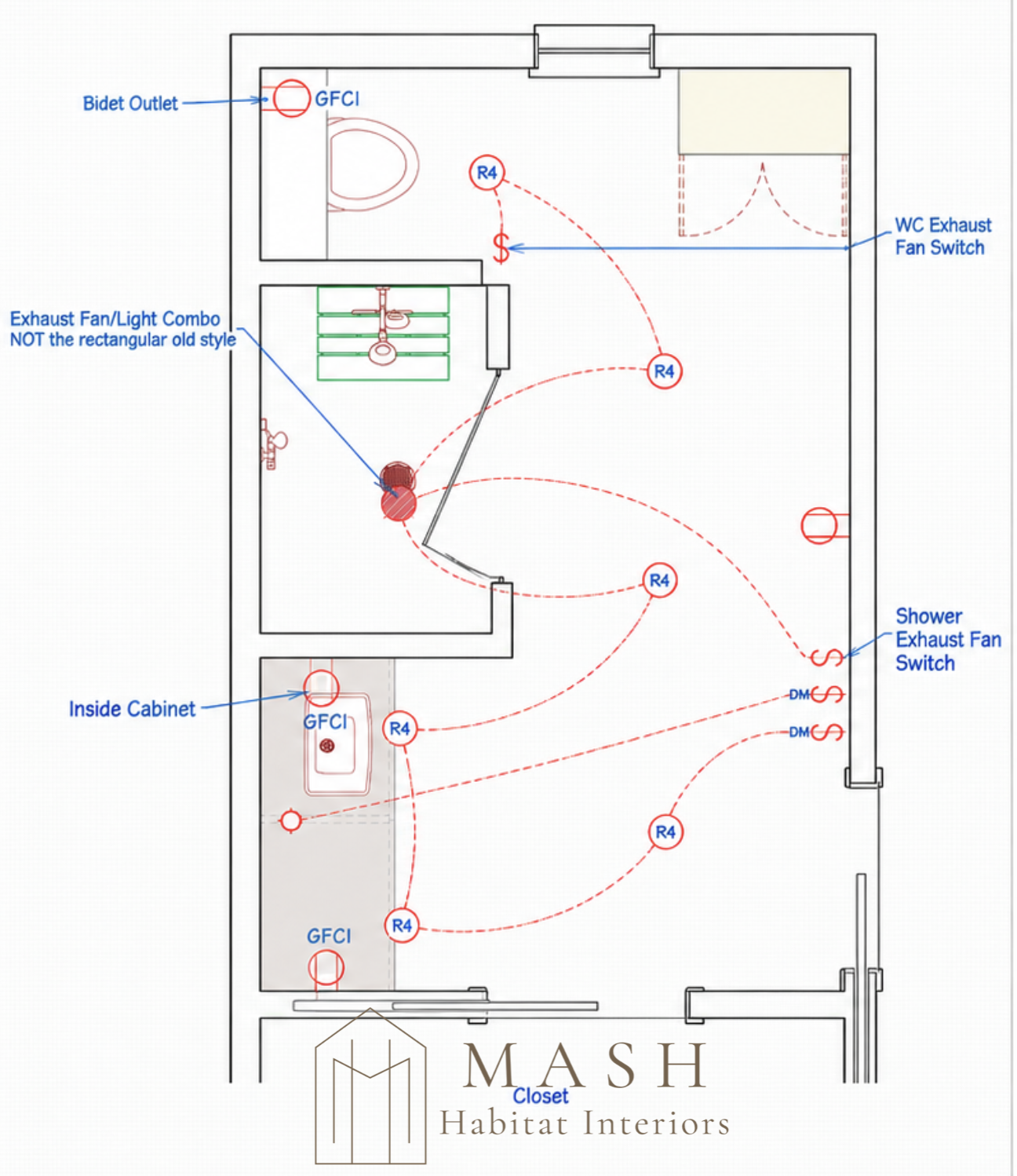
This is the part that happens before the pretty picture.
A well-designed room means thinking through layout, clearances, lighting, electrical, plumbing, storage and all the little details that need to work together—before they become expensive changes in the field.
3. Who Is Keeping Track of All of This?
By the time a remodel or new build is underway, there can be hundreds of decisions in motion.
Flooring. Tile. Grout. Plumbing. Cabinetry. Hardware. Appliances. Lighting. Paint. Wallcoverings. Furniture. Fabrics. Window treatments.
And every one of those decisions comes with another layer of information—dimensions, finishes, model numbers, quantities, lead times, pricing, approvals and installation details.
Someone needs to know which faucet was approved for which bathroom.
And preferably that person isn't searching through a six-month-old text thread while the plumber is standing there.
But organization isn't just about keeping a tidy spreadsheet or knowing where the specification sheet lives.
It's about making sure the right information gets to the right person at the right time.
The cabinetmaker needs dimensions before cabinetry is built. The electrician needs to know where the furniture is going before outlets are placed. The builder needs the tile layout before the installer starts asking questions on site.
And you, as the homeowner, should be able to understand what has been presented, what you've approved, what still needs a decision and what's coming next—without feeling like you've accidentally taken on a second job.
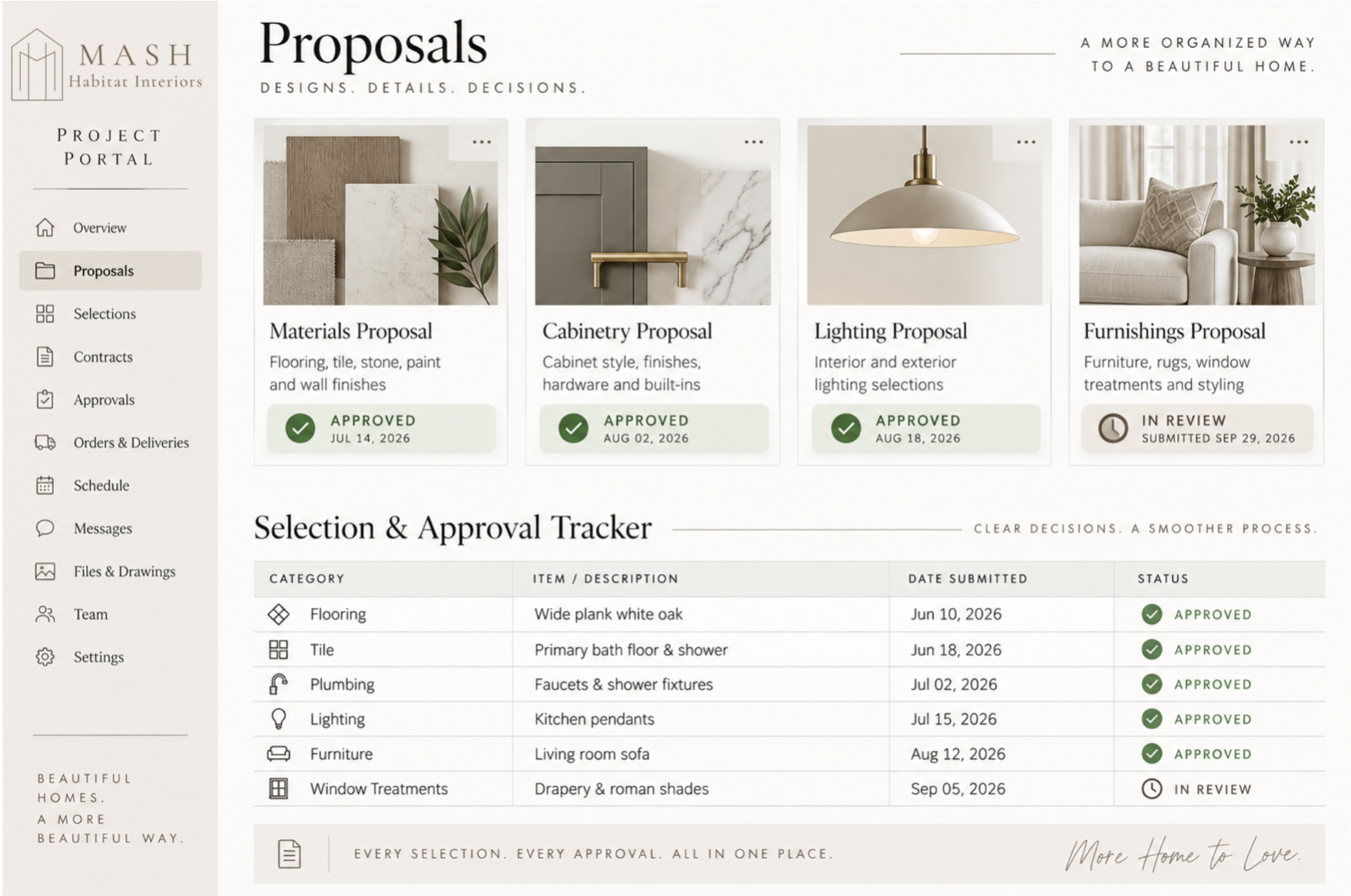
Organization isn't separate from good design. It's part of how good design gets built.
When you're interviewing a designer for a complex project, ask how selections, approvals, drawings and project information are documented and communicated.
You don't necessarily need to understand their entire system.
You just want to know that they have one.
4. What Happens When Something Changes?
Because something will.
A material gets discontinued. A fixture is suddenly backordered for five months. A wall gets opened and reveals something nobody expected. The fabric memo arrives and looks completely different than it did online.
Or the contractor calls with a question that needs an answer today.
And sometimes, as the design develops, you simply change your mind.
I don't love this anymore.
That happens too.
A good design process has enough structure to keep the project moving—and enough flexibility to respond when real life enters the room.
Because the important question isn't whether something will change.
It's what happens next.
Does the designer communicate the issue clearly? Can they evaluate the alternatives without losing sight of the overall design? Do they understand what else may be affected by the change?
Problem-solving isn't an interruption to the design process. It's part of the design process.
That is especially true in remodeling and construction.
5. Who Is Responsible for What?
On a furnishing project, there may be a designer, client, workroom, receiver, installer and several vendors involved.
On a remodel or new build, add the builder or contractor, architect, cabinetmaker, electrician, plumber, tile installer, stone fabricator, painter—and probably a few more people before it's over.
That's a lot of humans.
And they don't all need the same information, nor should everyone be responsible for everything.
Before you hire a designer, it's worth understanding how communication and responsibilities will work.
Who communicates design information to the builder and trades? Who takes or verifies field measurements? Who approves changes? When a question comes up on site, who answers it? And which decisions ultimately belong to the designer, contractor or homeowner?
There isn't one universal answer. The structure will vary depending on the designer, contractor and scope of the project.
The important thing is that the answer isn't a mystery once the project begins.
Everyone should understand who is responsible for what.
Because when three people assume someone else is handling something, that's usually when nobody is handling it.
And that can get expensive surprisingly quickly.
6. What Happens After You Approve the Design?
This is another part of the process homeowners don't always realize can be significant.
You approved the sofa. Great.
But approving the sofa and having it sitting beautifully in your living room are two very different things.
Depending on the scope of the project, someone still needs to place the order, confirm specifications, track it, coordinate freight and delivery, receive and inspect it, deal with damage if something arrives less than beautifully, schedule installation—and ultimately make sure it lands where it belongs.
The same is true for custom furniture, lighting, window treatments and many of the other pieces that eventually make a house feel finished.
And on a remodel or new build, there's another layer.
The design has to become information that people can actually build from.
That may mean drawings, dimensions, elevations, specifications and answers to questions that come up once work begins.
Design isn't finished when the decisions are made. Those decisions still have to make it into the house.
So when you're evaluating a designer's process, ask how far their involvement goes.
Does their role end when you approve the design? Do they provide drawings and specifications? Do they handle procurement? Coordinate with trades? Track orders? Oversee installation?
Different designers offer different levels of service—and that's perfectly fine.
What's important is knowing where their process ends and your responsibility begins.
A Good Process Should Make the Project Feel Lighter, Not Heavier
There are going to be decisions and emails. There may be dust, delayed shipments, unexpected discoveries behind walls and at least one moment when everyone is standing in a room discussing something nobody imagined would require a 20-minute conversation.
That's remodeling.
And honestly, some of that is unavoidable.
But the homeowner shouldn't have to carry every decision, remember every detail or constantly wonder what needs to happen next.
That's one of the reasons a process matters.
A good design process doesn't eliminate complexity. It organizes it.
When it's working well, you may not even realize how many things are being considered behind the scenes. You just know the project keeps moving forward—and that someone is keeping an eye on the bigger picture.
And ultimately, that's what a good process should give you:
Less to carry. More confidence in the decisions. And more room to actually enjoy watching your home come together.
That last thought is what was missing for me. “You just know the project keeps moving forward” is true, but it's a little operational for the final emotional takeaway.
For your luxury client, the real value isn't merely efficiency. It's decision relief. She can still be involved and collaborative, but she doesn't have to personally carry the complexity of the project.

Rooftop Moment
If I could tell every homeowner one thing about process before they hired an interior designer, it would be this:
Don’t only ask to see what they create. Ask how they get there.
Beautiful design requires creativity and good taste, of course.
But it also requires planning, communication, documentation, problem-solving, follow-through and hundreds of decisions made in an order that makes sense.
You want someone who can see the finished room.
But you also want someone who knows how to get you from where you are now to there.
Because the process shouldn’t get in the way of beautiful design. It should be what makes beautiful design possible.
Continue the MASH Guide to Hiring an Interior Designer
Continue with Part 4:
What Are You Actually Paying an Interior Designer For?
We’ll talk about the different ways interior designers structure their fees, what may—or may not—be included, what questions to ask before signing an agreement, and why comparing two design proposals isn’t always as simple as comparing the numbers at the bottom.
Because understanding the price matters. Understanding what you're receiving for it matters even more.
